

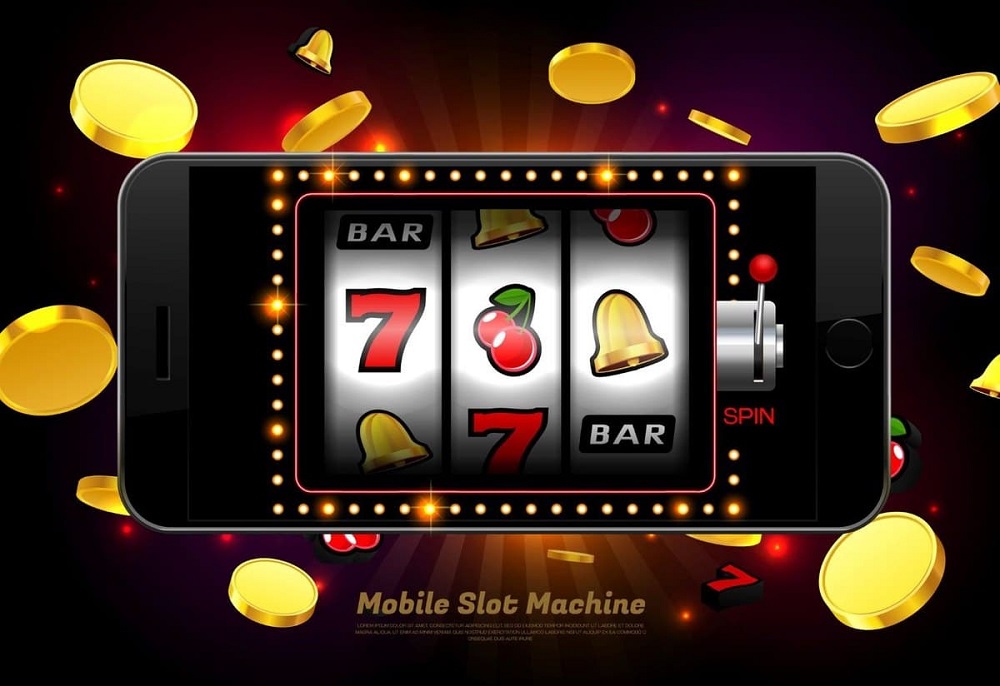
The mobile gaming industry has experienced explosive growth over the last decade, and online casino software developers have placed mobile slot machines at the center of their innovation strategies. In the early days of smartphone gaming, mobile slots were often rudimentary adaptations of desktop titles, constrained by limited processing power, small screen sizes, and slow internet speeds. Today, the paradigm has completely inverted. Modern slot games are developed using a mobile-first philosophy, ensuring that visual architecture, interface mechanics, and core mathematical structures are optimized for handheld devices from day one.
As mobile hardware continues to advance and global connectivity reaches unprecedented speeds, the boundary between digital casino entertainment and high-end video games is blurring. Developers are no longer satisfied with merely mirroring the traditional slot experience on a touchscreen. Instead, they are leveraging emerging technologies like artificial intelligence, high-speed cellular networks, spatial rendering, and friction-free payment frameworks to redefine what a mobile slot machine can be. Examining these core technological and behavioral shifts reveals how the next generation of mobile slots will captivate players worldwide.
Portrait-First Ergonomics and Touch-Native Controls
One of the most noticeable structural trends in mobile slot design is the transition from landscape orientation to portrait-first visual layouts. Historically, slot machines were built to mimic wide desktop monitors or physical cabinet screens, forcing mobile users to rotate their devices horizontally. However, market research consistently shows that smartphone users hold their devices vertically for the vast majority of daily tasks.
Designing slots specifically for portrait mode allows players to enjoy seamless, one-handed sessions while commuting or multi-tasking. This ergonomic shift has completely transformed user interface mechanics:
- Gesture-Based Inputs: Traditional click-to-spin buttons are being replaced by natural touch gestures, such as swiping down on the reels to trigger a spin, tapping to hold specific symbols, or pinching to zoom into active paylines.
- Vertical Reel Geometries: Developers are moving beyond classic three-by-five grids to tall, scrolling reel matrices that fit vertically oriented screens, utilizing mechanics like cascading reels and expanding symbol towers.
- Haptic Feedback Response: Advanced vibration engines inside modern smartphones allow games to deliver physical tactile feedback when scatter symbols land, wild combinations trigger, or high-value payouts occur.
By tailoring game geometry to physical hand positions, studios have made mobile slot gameplay significantly more intuitive, immersive, and comfortable for extended play.
Ultra-Low Latency Connectivity and 5G Optimization
The global expansion of 5G cellular infrastructure and mobile edge computing has eliminated technical bottlenecks that previously restricted mobile game developers. High latency and data limits once forced studios to compromise on asset quality, leading to compressed audio files, simplified animations, and scaled-down graphical effects.
With 5G connectivity delivering high speeds and near-zero latency, developers can stream studio-grade assets directly to mobile devices without requiring large application installation packages.
- Cinematic Visual Assets: High-definition video sequences, complex three-dimensional symbol animations, and dynamic lighting effects render in real time without causing lag or frame drops.
- Instantaneous Server Verification: Cryptographic random number generator checks and server-side win validations occur in milliseconds, producing instantaneous reel stops and smooth transitions between base play and bonus rounds.
- Cloud-Delivered Content Pipelines: Game operators can stream massive game catalogs from cloud servers directly to web platforms, reducing device storage requirements while providing access to complex game mechanics.
This network upgrade ensures that a player sitting on a train experiences the exact same visual fluidity and operational reliability as a user playing on a high-end desktop workstation connected to fiber internet.
Artificial Intelligence and Hyper-Personalized Gameplay
Artificial intelligence is fundamentally changing how mobile slot applications interact with players. Rather than presenting every user with a static list of popular games, modern mobile platforms utilize machine learning algorithms to build individualized user experiences based on real-time behavioral data.
AI engines analyze metrics such as preferred volatility levels, average bet sizes, session lengths, visual theme preferences, and bonus feature choices. This data allows the platform to dynamically adjust the user interface:
- Adaptive Lobby Curation: The application automatically reorganizes game libraries to highlight titles that align with the player’s personal playing style and historical preferences.
- Dynamic Audio and Visual Themes: Games can alter background ambient soundscapes or visual accent colors based on the time of day or the player’s current engagement state.
- Proactive Responsible Gaming Tools: Machine learning monitoring systems analyze betting patterns to detect signs of risky behavior, automatically suggesting cool-off periods or custom deposit limits before problematic play escalates.
This level of hyper-personalization keeps players engaged by delivering content that matches their specific tastes while establishing safer, data-backed environments.
Gamification, Narrative Progression, and Skill-Based Elements
Modern mobile casino players, particularly younger demographics raised on interactive mobile games, demand more depth than simple repetitive button pressing. In response, game developers are embedding complex gamification layers, narrative arcs, and skill-based interactive mechanics directly into mobile slots.
Instead of isolated spinning sessions, newer titles feature long-term progression systems where players undertake quest maps, unlock character abilities, and complete daily challenges.
- Persistent Unlockable Content: Players earn experience points that unlock new reel sets, story chapters, or enhanced bonus multipliers over multiple sessions.
- Skill-Informed Bonus Rounds: While the core mathematical payout of a slot remains anchored to verified random number generators, secondary bonus rounds increasingly feature arcade-style minigames, shooting galleries, or tactical choices where player dexterity influences secondary reward multipliers.
- Social Leaderboards and Multiplayer Events: Asynchronous tournaments allow players to compete against friends or global player pools in real-time races, earning achievements and shared prize pools based on session performance.
By pairing classic slot math with game mechanics borrowed from traditional video games, developers are creating deeper engagement loops that extend the shelf life of modern titles.
Seamless Biometric Onboarding and Instant Payment Frameworks
The friction associated with logging in, verifying identity documents, and initiating bank transfers has historically been a major point of drop-off for mobile casino players. Advances in mobile fintech and device hardware have largely eliminated these hurdles, allowing instant, secure access to real-money play.
Smartphones now integrate hardware-level biometric authentication tools, such as facial recognition scans and fingerprint sensors. These security features allow players to log into accounts, confirm identity verification checks, and approve financial transactions in seconds without entering traditional passwords or fill out long text forms.
Simultaneously, mobile-native payment solutions like digital wallets, instant open-banking transfers, and decentralized cryptocurrency networks facilitate near-instantaneous deposits and automated withdrawal processing. Players can fund an account and start playing within moments, enjoying a frictionless user journey from start to finish.
Augmented Reality and Spatial Mobile Experiences
As wearable spatial computing devices and smartphone augmented reality SDKs mature, slot machine developers are experimenting with spatial interfaces. Augmented reality features blend digital reel matrices into physical real-world environments through the smartphone camera lens.
Rather than viewing a flat two-dimensional screen, players can project a holographic three-dimensional slot cabinet onto their living room table or physical desk. Users can walk around the digital cabinet, view intricate character models from multiple angles, and interact with three-dimensional physical levers using hand-tracking gestures. This bridge between physical reality and digital simulation represents a major frontier for player immersion in the coming years.
Frequently Asked Questions
How do mobile slot engines preserve battery life and prevent overheating during extended three-dimensional gameplay?
Modern mobile slot engines utilize dynamic resource scaling frameworks that adjust rendering workloads based on device hardware health. The game client automatically lowers background frame rates during static reel states, compresses non-essential background animations, and delegates heavy mathematical calculations to remote cloud servers. This lowers the workload on the device central processor and graphics chip, preserving battery power and limiting heat buildup.
What happens to an active mobile slot spin if an incoming call or network signal drop disrupts the connection?
Mobile slot games operate using server-side determination logic. The moment a spin command is initiated by touching the screen, the random number generator on the secure game server immediately determines the final outcome. If a network interruption occurs mid-spin, the server completes the calculation and credits any resulting winnings to the player account balance automatically. When the player restores the connection, the game client retrieves the saved state from the server and replays the outcome.
How do game studios ensure fair random number generation on third-party mobile web browsers versus native apps?
Regulated mobile slot games utilize certified server-side random number generators that run entirely on audited remote servers rather than inside the local mobile browser or app. The mobile browser or app merely acts as a visual display terminal. Because the core mathematical generation and logic checks happen in isolated data centers verified by independent testing laboratories, the integrity and randomness of the game remain identical regardless of the browser or device used.
What is the technical difference between a native mobile slot app and a Progressive Web App slot?
A native mobile slot app is built using platform-specific programming languages and must be downloaded and installed directly through an application store onto the device storage. A Progressive Web App slot runs directly inside mobile web browsers using standard web technologies like HTML5 and WebGL, offering instant access without requiring a download, while still retaining native-like capabilities such as offline caching, full-screen displays, and push notifications.
How are regulatory bodies adapting compliance testing for real-time artificial intelligence personalization in mobile slot machines?
Gaming regulatory agencies mandate strict boundaries separating personalization systems from core game math. AI algorithms are permitted to adjust external user interface elements, recommended game lists, promotional timing, and responsible gaming notifications. However, regulations strictly prohibit AI systems from altering certified paytables, hit frequencies, or return-to-player percentages based on individual player behavior.
Are mobile slot machines developed differently for foldable smartphones compared to standard glass slabs?
Yes, slot developers utilize responsive design frameworks that automatically detect screen aspect ratio changes in real time. On foldable devices, the game client dynamically smoothly shifts between a single-screen portrait view when closed and an expanded multi-reel layout or dual-screen interface when unfolded, taking advantage of the additional display space to show high-resolution paytables, expanded reel matrices, and animated bonus elements.
How does haptic feedback technology contribute to gameplay without causing physical user fatigue?
Haptic feedback systems in modern smartphones utilize precise linear resonant actuators to produce subtle localized vibrations rather than continuous heavy rumbles. Software developers carefully map custom vibration patterns to key events, such as a crisp micro-click when a button is pressed or a light pulse when a high-value symbol lands. By keeping these physical feedback impulses short, selective, and low-intensity, the game heightens tactile immersion without straining the user’s hands.